Meme coin trading works when you copy a pro's process instead of chasing pumps
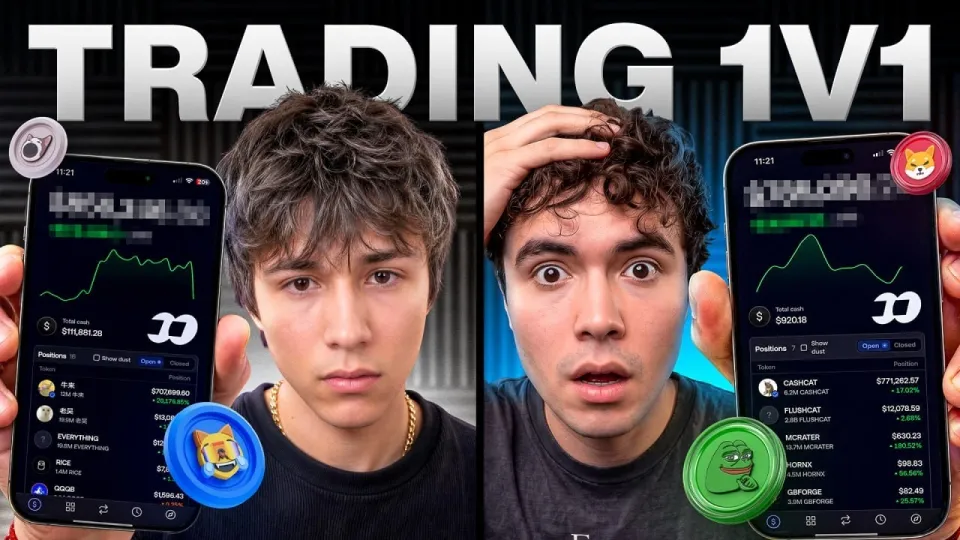
Video: I Challenged A Pro Memecoin Trader (Who Won?)
Want articles like this for your own video to promote it on YouTube and Google? Order them through the Telegram bot @sat_sit_bot. Articles with your video embedded are written and posted by the bot itself — on popular topical sites (no ads). Try it free: 50 articles on us.
· based on the channel insentos
Meme coin trading is short-horizon speculation on tokens with no cash flow, launched mostly on Solana and Ethereum, where the edge comes from speed, position sizing and exit discipline rather than from fundamentals. A pro does not predict the next runner; they define risk per trade, take liquidity where it exists and cut fast when the thesis breaks. The insentos challenge video, where the host trades live against an invited pro and takes questions mid-session, is a useful template for that process — and the entry point for the tools used there is FOMO Family registration.
What a meme coin actually is and why the rules differ from normal crypto
A meme coin is a token whose value rests on attention and community rather than revenue, so its price is driven by liquidity flow, narrative rotation and holder behaviour. That changes the trading math: spreads are wide, order books are thin, and a single wallet can move a chart. On Solana, launches are cheap and fast, which means thousands of new tokens per week and a very short half-life for most of them. Practically, this means three things for anyone trading meme coins:
- Liquidity is the first filter — if you cannot exit a meaningful size without moving price, the trade is too big.
- Narrative timing beats analysis — being early to a theme matters more than being right about the token's "quality".
- Rug risk is structural — mint authority, holder concentration and dev wallet behaviour are checks, not guarantees.
The live-session format in the insentos challenge
The insentos video runs a little over 40 minutes and is built around trading with a guest rather than around a scripted lesson. The host and the pro keep positions open while explaining decisions, and the guest repeatedly pulls the conversation back to the reasoning behind each entry and exit, which is exactly the part beginners miss when they only watch profit screenshots. The session also includes a segment trading alongside another participant, which shows how the same setup behaves with different sizing and different patience.
What makes the format worth copying is that the advice is given under pressure. A trader explaining a plan after the fact sounds disciplined; a trader explaining it with an open position and a moving chart shows whether the discipline is real. Viewers noticed this and asked for the format to become recurring — several comments push for a weekly series, and one of the most-liked notes points out that the guest stayed informative even mid-trade.
A repeatable meme coin workflow from screen to exit
A workable meme coin process fits on one page, and the tools in the video map onto it directly. Axiom (https://axiom.trade/) covers execution and charting, while FOMO Family covers community flow and shared calls. The sequence below is the one that survives contact with a fast market:
- Screen for fresh liquidity and unusual volume, not for price already up 300%.
- Check the contract: mint authority revoked, liquidity locked or burned, top holders not clustered in one wallet cluster.
- Size the position so a full loss is a rounding error against your stack — 1–2% of capital per attempt is a common ceiling.
- Set the invalidation before entry: a market-cap level, a time limit, or a holder-count drop.
- Scale out in tranches — recover the initial stake early, then let a runner ride with house money.
- Log the trade with entry reason and exit reason; the log is where the edge becomes visible.
Scalping on Solana meme coins adds one constraint: latency. If your execution path takes ten seconds to fill, the setup you saw is gone, which is why traders concentrate on a single terminal instead of juggling tabs.
Risk control that separates a session from gambling
Risk control is the only part of meme coin trading that compounds, because the hit rate on new launches is low by design. The most-liked critical comment under the video makes the point bluntly: streams like this often end in losses, and trading from an influential account with a built-in audience is easier than trading from a small wallet with no flow. That is a fair warning, and it should shape expectations rather than kill interest.
A few rules keep the activity on the right side of the line:
- Cap daily attempts. After three stop-outs, stop; the fourth trade is usually revenge.
- Never average down into a token whose thesis was "it is going up".
- Treat unrealised gains as unrealised; take the initial capital off the table first.
- Accept that a large share of launches go to zero, and size as if that is the base case.
- Separate the trading stack from savings entirely — one wallet, one budget, no top-ups mid-session.
Common questions from new meme coin traders
New traders arrive with the same handful of doubts, and the comment thread under the challenge surfaces them clearly. The most frequent request is for more beginner-oriented walkthroughs, which suggests the gap is not information but repetition: watching a decision made live, several times, in different conditions. The second theme is access — people note that everyone advertises communities and groups but joining them is often harder than it looks, so a working invite link matters more than a landing page. The third is credibility: viewers want to see the same trader operate from a small account without an audience, since that is the only honest test of whether the process works. The fourth is format — a long-running bankroll challenge, starting from a small balance and building it in public, is the single most requested follow-up.
Useful links
- FOMO Family registration and community access
- Axiom trading terminal: https://axiom.trade/
- insentos on X: https://x.com/insentos
- insentos on Instagram: https://www.instagram.com/insentos
- insentos on TikTok: https://www.tiktok.com/@insentos
Bottom line
The insentos challenge is valuable less as a highlight reel and more as a look at how a professional handles uncertainty in real time: sizing first, invalidation second, narrative last. Anyone trading meme coins should copy the checklist before copying the trades, because the checklist is what survives a bad week. If you want the same environment the session was run in, start with FOMO Family, then keep a trade log for a month and compare your decisions against the ones made on screen. The channel insentos is the author of this breakdown, and its live-format episodes are the closest thing to a supervised practice session available for free.
Key takeaways
- The insentos challenge video pits the host against a guest pro trader in a live meme coin session, with advice given while trades are open.
- Two tools anchor the workflow: Axiom for execution and charting, FOMO Family for community and signals.
- Most viewer comments ask for more beginner-level walkthroughs, which points to process (sizing, entries, exits) as the real gap.
- A recurring viewer doubt: streams like this often end in losses, and trading from an influential account is easier than from a small one.
- A 50-to-1000 challenge is the most requested follow-up format in the comments.
Questions & answers
How much capital do you need to start trading meme coins?
You can start with a small balance, but the constraint is fees and slippage rather than the minimum ticket. On Solana, transaction costs are low, yet thin liquidity means a position that is too large for the pool will lose value on entry and exit. Size each attempt at 1–2% of your trading stack so a full loss does not change your ability to take the next setup.
Why do live meme coin trading streams often end in losses?
Because the hit rate on new launches is genuinely low and most sessions include several failed attempts before one works. Streams also compress time, so viewers see many trades in an hour that would normally be spread over days. Treat a session as a demonstration of process, not as a profit forecast, and judge it by how losses were cut rather than by the final number.
Is trading from a large account easier than from a small one?
Yes in one specific way: an account with an audience can generate exit liquidity that a small wallet cannot. That advantage does not transfer, so the setups shown still have to be judged on their own risk and reward. Copy the checklist and the sizing logic, not the position sizes.
What should a beginner practise first?
Start with contract checks and exit discipline on tiny size, because those two skills decide survival. Screening for fresh liquidity and reading holder distribution come next, and only then should you work on entries. Keeping a written log of every trade for a month will show you faster than any course where the actual leaks are.
Source: I Challenged A Pro Memecoin Trader (Who Won?) · Markdown version